
Why the cold chain matters for semen and vaccines
The quality of biological products depends on staying at the right temperature from production to use.
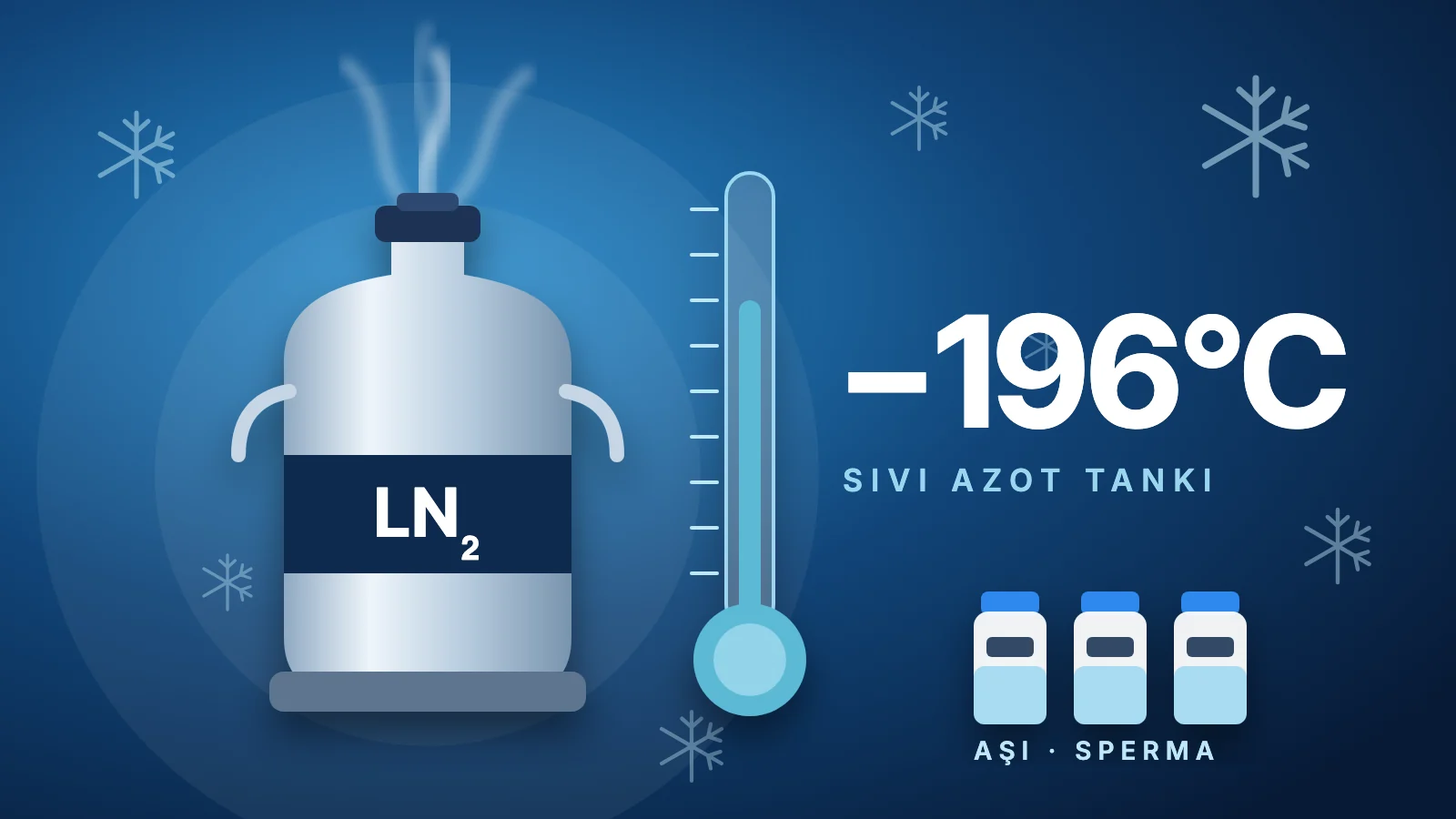
Biological products such as semen and vaccines are very sensitive to temperature. They must stay at the right temperature from production until they reach your herd. This continuity is called the cold chain; a break in a single link can affect product quality irreversibly.
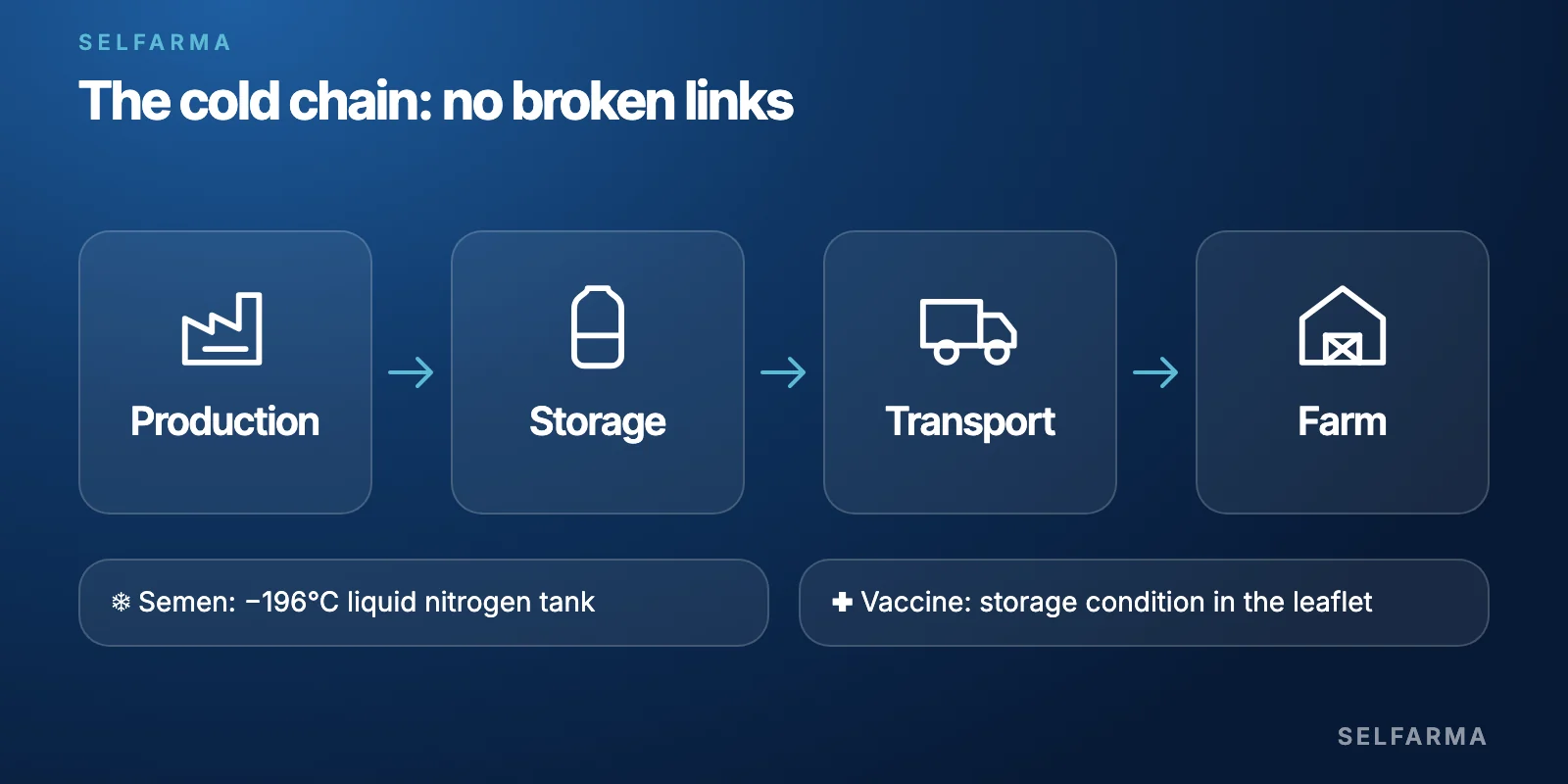
Semen: the liquid nitrogen tank
Bull semen is stored and transported in liquid nitrogen tanks at -196°C. At this temperature biological activity stops. To keep the tank working well:
- Check the nitrogen level at regular intervals and keep a record.
- Keep the tank on a level floor in a cool, ventilated place without vibration.
- Do not leave the lid open longer than necessary.
- Keep the straws below the neck of the tank and do not lift them up unnecessarily.
Vaccines: refrigerator temperature
Most vaccines are stored at refrigerator temperature within the limits stated in the leaflet. The right storage condition is written in each product's leaflet, so:
- Check the storage condition in the leaflet as soon as you receive the product.
- Store it on the inner shelves of the refrigerator, away from the wall, not on the door shelf.
- Do not let it freeze unless the leaflet allows it.
- Protect it from light and direct sunlight.
During transport
- Use a cool box and ice packs, and do not let the product touch ice directly.
- Put the product into proper storage as soon as you arrive at the farm.
- Do not leave it waiting in the vehicle.
The most common mistakes
- Opening the refrigerator or tank often and for long.
- Never measuring or recording the temperature.
- Having no backup plan for a power cut.
The cold chain at Selfarma
The guarantee of biological products lies in uncompromising logistics. We keep and ship our vaccines under suitable temperature conditions and our semen portfolio in liquid nitrogen tanks. Take a look at the liquid nitrogen tanks you can use on your farm, and write to us with any questions.
For storage and use conditions, always refer to the product leaflet and your veterinarian.